What Is the Byodo-In Temple on Oahu?
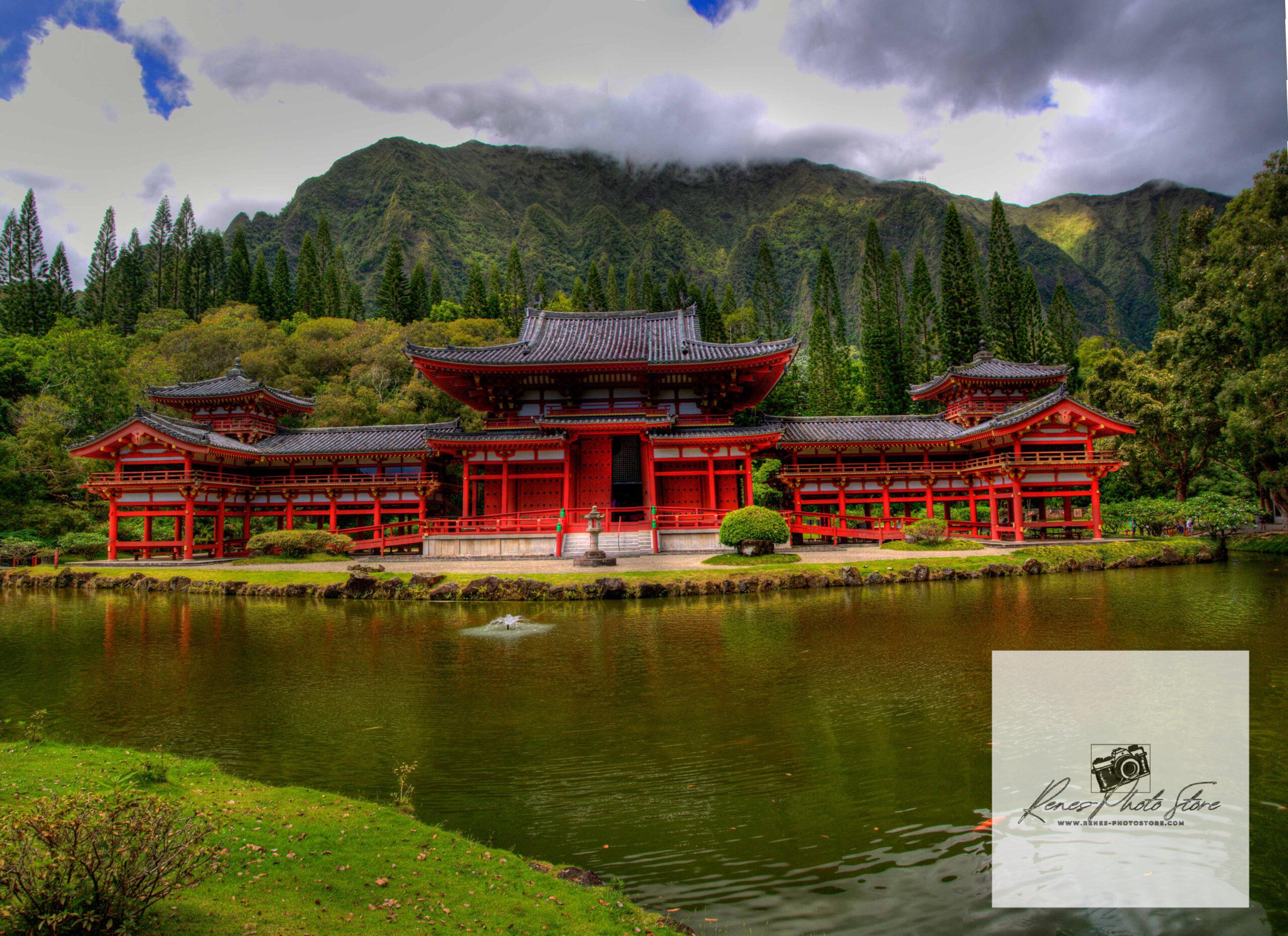
Nestled at the foot of the Koʻolau Mountains in the lush Valley of the Temples Memorial Park, the Byodo-In Temple is a non-denominational Buddhist temple that welcomes visitors of all faiths. It sits on Oahu’s windward side, surrounded by manicured gardens, koi ponds, and towering cliffs that create a uniquely peaceful atmosphere.pearlharbortours+3
The temple is a nearly full-scale replica of the famous Byōdō‑in in Uji, Japan, a Heian‑period masterpiece and UNESCO World Heritage Site. While the original in Japan is built of wood without nails, the Oahu version is constructed primarily from concrete, designed to withstand Hawaii’s tropical climate while preserving its classic architectural lines.yourhawaiiguide+3
Inside, visitors find a large gilded Buddha statue seated on a lotus, symbolizing enlightenment and compassion. The hall is softly lit and accented with intricate brass artwork on the ceiling, enhancing the sense of serenity and reverence. Outside, the sound of a three‑ton peace bell, rung by guests at the entrance, sets the tone for reflection and meditation.captainmaxhawaii+1
History of the Byodo-In Temple in Hawaii
The Byodo-In Temple on Oahu was completed and dedicated in 1968 to commemorate the 100th anniversary of the first Japanese immigrants arriving in Hawaii in 1868. These immigrants initially came to work on sugarcane and pineapple plantations and played a major role in shaping Hawaii’s multicultural society.shakaguide+4
Construction of the temple took roughly three years. It was commissioned as a tribute to Japanese heritage in Hawaii and dedicated with a traditional Buddhist ceremony, attended by community leaders and local officials. Then‑Governor John A. Burns, known for supporting Japanese American civil rights, took part in the dedication, underscoring its cultural and historical significance.kealakai.byuh+2
From the beginning, the vision was not to create a working monastery but a symbolic “temple of equality,” echoing the name Byōdō‑in, which translates as “Temple of Equality.” The Hawaii temple mirrors the Phoenix Hall of the original, famous for its graceful wings and reflection in the surrounding pond, a scene evoking the Buddhist Pure Land paradise.japan-experience+3
Over the decades, the Byodo-In Temple has evolved into one of Oahu’s most beloved attractions, drawing hundreds of thousands of visitors annually. It has also appeared in films and television shows, further spreading its iconic image of red pillars, green mountains, and still waters to audiences worldwide.byodo-in+1
Architecture, Grounds, and Spiritual Atmosphere
Architecturally, Byodo-In Temple showcases classic Japanese Buddhist design with its curved rooflines, vermilion‑colored beams, and symmetrical layout around a central hall. The structure’s reflection on the large koi‑filled pond creates a mirror image reminiscent of its ancient counterpart in Uji.pearlharbortours+1
The temple grounds feature stone lanterns, small bridges, and landscaped paths that invite slow, mindful walks. Visitors can pause by the koi pond, watch black swans glide across the water, or sit on benches in the shade of carefully tended trees and shrubs. The backdrop of the Koʻolau Mountains adds a dramatic sense of scale, making the temple feel at once intimate and awe‑inspiring.byodo-in+2
Though non‑denominational and non‑practicing, the temple functions as a place for meditation, quiet prayer, and remembrance. It stands within Valley of the Temples Memorial Park, where many local residents choose to be laid to rest in a setting that embodies peace and continuity. The combination of memorial park and temple creates a powerful space for honoring ancestors and reflecting on life’s impermanence.wikipedia+2
Cultural Significance and Why It Matters Today
Byodo-In Temple symbolizes the enduring relationship between Hawaii and Japan, and more broadly, the blending of cultures that defines modern Hawaii. Its founding honors the sacrifices and resilience of Japanese immigrants who helped build Hawaii’s economy and enriched its traditions, cuisine, and values.shakaguide+2
The temple also serves as an accessible introduction to Japanese Buddhist aesthetics for visitors who may never travel to Uji. Through its design, the ringing of the peace bell, and the quiet of its grounds, it offers a tangible experience of concepts like harmony, respect, and mindfulness.yourhawaiiguide+3
For travelers, photographers, and locals alike, Byodo-In has become a must‑see destination on Oahu. Its photogenic setting makes it especially popular among wedding parties, portrait photographers, and landscape enthusiasts who are drawn to its interplay of architecture, water, and mountains. Visiting the temple is often described as a chance to slow down between beach days, re‑center, and appreciate Hawaii’s multicultural story in a single, serene setting.lunainorbit+3
Visiting Byodo-In Temple: What to Expect
Reaching Byodo-In Temple typically involves a drive across or around the island to Kaneohe, followed by a short entrance through Valley of the Temples Memorial Park. Once you arrive, you’ll walk past the large peace bell, cross a small bridge, and step into the temple’s main courtyard framed by koi ponds and gardens.lunainorbit+1
Inside the temple, guests are asked to remove their shoes and maintain a quiet, respectful demeanor as they view the large Lotus Buddha. Incense and offerings may be present, reflecting the site’s spiritual purpose for some visitors. Outside, it’s common to spend time feeding koi, exploring the smaller shrines and paths, and simply sitting to soak in the tranquility.pearlharbortours+2
Because it’s a religiously inspired site within an active memorial park, modest dress and considerate behavior are encouraged. Photographers will find numerous vantage points—from wide shots of the temple and mountains to close‑ups of architectural details and reflections in the water. Early morning or late afternoon light often adds extra depth and color to the scene, making it a favorite stop on Oahu photography itineraries.captainmaxhawaii+3
ion, main subject, mood, and colors), and I’ll write a fully customized product description using this SEO structure.