History of the Seven Mile Bridge
The Seven Mile Bridge in the Florida Keys is far more than a long stretch of concrete over turquoise water; it is a symbol of ambition, resilience, and engineering ingenuity that reshaped South Florida. Sitting along U.S. Route 1 on the Overseas Highway, the bridge connects Knight’s Key near Marathon to Little Duck Key, linking the Middle Keys to the Lower Keys and opening the island chain to the world. Over time, two different structures have carried the name “Seven Mile Bridge”: the original railroad and highway bridge, and the modern concrete span drivers use today. Together, they tell a story of daring vision, devastating hurricanes, and continual reinvention.
Flagler’s dream and the Overseas Railroad
The history of the Seven Mile Bridge begins with industrialist Henry Flagler, a former Standard Oil partner who devoted the later years of his life to developing Florida’s east coast. Flagler had already built the Florida East Coast Railway from Jacksonville to Miami when he turned his attention farther south. Inspired in part by the planned Panama Canal and the opportunity to connect to a deep-water port close to new shipping routes, he envisioned an “Overseas Railroad” from mainland Florida all the way to Key West.
Construction of the Key West Extension of the Florida East Coast Railway began in 1905, stretching roughly 160 miles from Miami to Key West, with more than a hundred of those miles running over open ocean and shallow reef. The section that would become known as the Seven Mile Bridge was actually a series of connected spans across the Moser Channel area between Knight’s Key and Little Duck Key. At the time, this project was so audacious that critics dubbed it “Flagler’s Folly,” insisting that no railroad could withstand the harsh conditions, hurricanes, and corrosive saltwater of the Keys.
Engineers and laborers, many of them immigrants, battled storms, intense heat, and logistical challenges to drive piles into the seafloor and build embankments and trestles across open water. Work camps were established on small islands, and materials had to be shipped by boat and rail. Hurricanes repeatedly damaged works-in-progress, forcing crews to rebuild and redesign sections along the way. Despite the setbacks, Flagler’s resources and determination pushed the project forward.
Completion of the original bridge
After several years of construction, the Overseas Railroad and its long bridge over Moser Channel neared completion. The stretch that included what we now call the Seven Mile Bridge was originally a collection of bridges with names such as Knights Key Bridge and Pigeon Key Bridge rather than a single formally titled structure. Nonetheless, for the traveling public it became known collectively as the Seven Mile Bridge due to its impressive length.
In early 1912, Flagler’s dream was realized when the first trains reached Key West. Contemporary accounts celebrated the feat as an engineering wonder—some even called the railroad the “Eighth Wonder of the World.” The bridge carried trains high above the water, with Pigeon Key serving as a small construction and maintenance island along the route. For the first time, Key West had a direct rail link to the U.S. mainland, transforming trade, tourism, and life in the Keys.
Flagler, by then elderly and nearly blind, reportedly rode the inaugural train to Key West, capping a project that had taken years, cost tens of millions of dollars, and claimed many lives. The Seven Mile segment stood as one of the longest and most dramatic overwater railroad crossings on earth, a powerful visual expression of human ambition in a challenging environment.
Hurricane disaster and conversion to a highway
For more than two decades, the Overseas Railroad provided a vital connection to the Keys. However, the line was always expensive to maintain, and the structures were constantly battered by storms and salt air. In 1935, the Labor Day Hurricane—one of the most intense hurricanes ever to strike the United States—devastated the railway. Sections of track and bridge were torn apart, and many people perished in the storm, including veterans working on New Deal projects in the area. The railroad suffered such extensive damage that the Florida East Coast Railway, already financially strained, decided not to rebuild the line to Key West.
In the years that followed, the State of Florida and the federal government saw an opportunity to repurpose the damaged railroad infrastructure. Rather than abandoning Flagler’s massive investment, they acquired the right-of-way and began converting the existing bridges and viaducts for automobile use. This transformation ultimately created the foundation for the Overseas Highway, a roadway that would open the Keys to motor traffic and tourism.
By adapting the old railroad bridge for cars, engineers added a paved deck, guardrails, and other safety features on top of the existing structure. The “new” Seven Mile Bridge for autos was narrower and more constrained than modern drivers are used to today, with limited shoulders and a swing span to allow boat traffic through. Nevertheless, it was a crucial link in the chain of islands and helped usher in a new era in the Keys, shifting from a railroad-based economy toward one centered on road travel and tourism.
The need for a modern bridge
As automobile traffic increased throughout the mid‑20th century, it became clear that the converted railroad bridges—including the Seven Mile segment—were no longer adequate. The narrow lanes, aging structure, and low clearances posed safety and operational challenges. By the 1960s and 1970s, serious questions arose about the long-term viability and safety of the old bridge.
Florida’s transportation planners began developing a comprehensive plan to replace many of the old Overseas Highway bridges with modern, purpose‑built roadway structures. This included a new Seven Mile Bridge that would run parallel to the old one but be designed from the ground up for vehicular traffic, hurricane resistance, and increased clearance for vessels passing below.
The project called for a contemporary solution that could withstand severe weather, minimize maintenance in the harsh marine environment, and accommodate growing traffic volumes. Engineers turned to precast, prestressed concrete and segmental bridge design methods that were cutting-edge at the time, enabling faster construction and improved durability.
Construction of the new Seven Mile Bridge
Construction of the modern Seven Mile Bridge began in the late 1970s, with work starting around 1978. The new bridge was designed as a continuous concrete segmental box girder structure, built using precast segments manufactured offsite and brought in for installation. This approach allowed crews to assemble spans rapidly, working out over open water while minimizing disruption to the fragile marine ecosystem below.
The resulting bridge stretches approximately 6.7–6.8 miles (about 10.9 kilometers), making it one of the longest bridges in the Florida Keys and historically one of the longest segmental bridges in the world at the time of its completion. The structure carries two wide lanes of U.S. Route 1 with shoulders, giving drivers more room and a greater sense of security than the older converted railroad bridge. At its highest point, the bridge rises roughly 65 feet above the water, allowing larger boats to pass beneath without the need for a swing span.
Engineers also integrated practical infrastructure into the design, including a water main running along the bridge that carries fresh water from the mainland to the Keys. This combination of transportation and utility use underscores the bridge’s role as a lifeline for the islands. Despite the technical and environmental challenges, the project finished on an accelerated schedule, and the new Seven Mile Bridge opened to traffic in 1982.
The old bridge’s second life
With the new bridge in place, the original structure was no longer needed for vehicular traffic, and sections were eventually closed to cars. However, the old Seven Mile Bridge—especially the portion connecting Marathon to Pigeon Key—has taken on a new life as a recreational and historical landmark. Portions of the old bridge were preserved and rehabilitated as a pedestrian and cycling path, giving visitors a unique vantage point over the water and a tangible connection to the Keys’ early 20th‑century history.
Pigeon Key, once a bustling construction camp and maintenance outpost for the railroad, now serves as a historic site and museum that tells the story of Flagler’s railroad and the people who built it. Walking or biking on the old bridge offers views of both the modern span and the surrounding clear waters, along with interpretive displays and historical narratives.
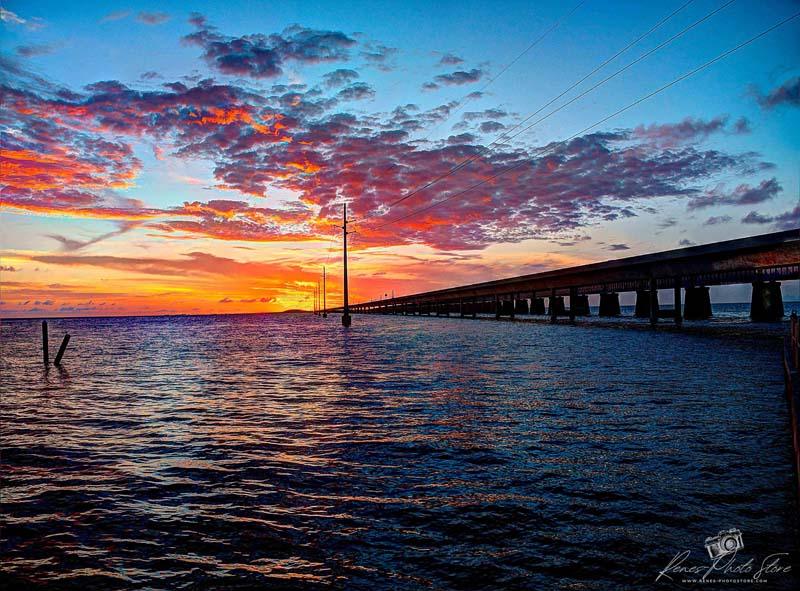
The old bridge has also become a beloved spot for fishing, photography, and quiet contemplation. Its weathered steel and concrete stand alongside the sleeker modern structure, visually reminding visitors of the evolution from railroad to highway and from “Flagler’s Folly” to a global tourism icon.
Engineering significance and cultural impact
Beyond its practical function, the Seven Mile Bridge holds a special place in both engineering history and popular culture. Engineers study the bridge as a pioneering example of long-span concrete segmental design in a harsh marine environment, highlighting lessons about durability, maintenance, and hurricane resilience. Its use of precast segments and post‑tensioning was influential for other projects in Florida and around the world, proving that long, low-profile spans could be built efficiently and maintained over time.
Culturally, the bridge has become one of the most recognizable symbols of the Florida Keys. It features in films, television shows, commercials, and countless travel photographs, often representing freedom, adventure, and the allure of the open road over aquamarine seas. For many visitors, the experience of driving the Seven Mile Bridge is a highlight of their trip, a moment when sky and water seem to blur and the horizon stretches endlessly ahead.
At the same time, locals know the bridge as a vital artery that supports everyday life—carrying residents, goods, emergency services, and tourists between the islands. Its closure for storms or maintenance underscores just how essential this link is to the functioning of the Keys.
The Seven Mile Bridge today
Today, the Seven Mile Bridge stands as both a practical roadway and an enduring monument to over a century of innovation in the Florida Keys. The modern bridge continues to carry heavy traffic as part of U.S. Route 1 and the Overseas Highway, while ongoing inspections and maintenance ensure its safety in the face of saltwater, sun, and seasonal storms. Travel guides routinely highlight the drive over the bridge as one of North America’s most scenic routes, encouraging visitors to slow down, roll down the windows, and soak in the views.
Efforts to preserve and restore the old bridge segment to Pigeon Key highlight the region’s commitment to honoring its history even as it invests in modern infrastructure. Together, the two bridges—old and new—tell a compelling story of visionaries like Henry Flagler, of workers who risked their lives over open ocean, of communities adapting to disaster, and of engineers who turned lessons from the past into safer, more resilient designs.
For anyone interested in transportation history, engineering, or simply the romance of the road, the history of the Seven Mile Bridge offers a rich narrative. It is a reminder that the path to a seemingly simple drive over blue water can span generations, bridging not just islands, but eras.