
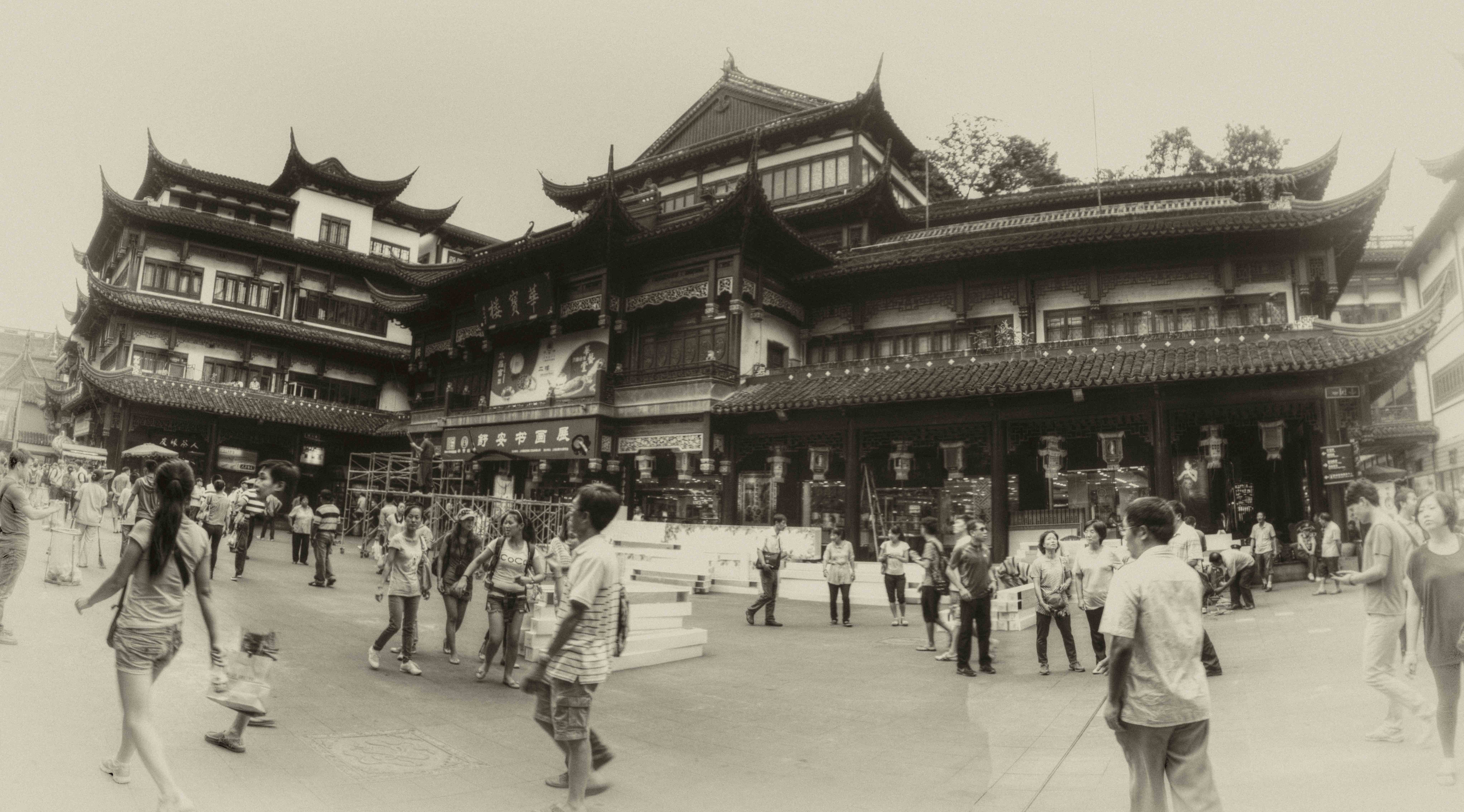
The History of Shanghai’s Famous Yu Gardens
Tucked within the heart of Shanghai’s Old City lies one of China’s most treasured cultural landmarks — the Yu Gardens (Yuyuan Garden). For centuries, this classical Chinese garden has stood as a living reflection of the nation’s artistic philosophy, architectural mastery, and deep-rooted connection between humanity and nature. Its story is interwoven with dynastic ambition, war, cultural rebirth, and the enduring beauty of traditional design.
Origins in the Ming Dynasty
Yu Garden’s history begins in the mid-16th century, during the reign of the Ming Dynasty (1368–1644). Built by Pan Yunduan, a government officer serving in Sichuan, the garden was conceived as a private retreat for his aging parents — the name “Yu” itself means “peace and comfort”. Pan envisioned the space as a sanctuary that would bring serenity and happiness to his family amid the bustling life of the old walled city.
Construction began around 1559 and continued for nearly 20 years, with enormous investment poured into recreating the elegance of imperial gardens on a smaller, private scale. By the time the Yu family completed the garden, it spanned over 20,000 square meters, boasting exquisite pavilions, rockeries, bridges, and ponds filled with koi — all carefully arranged to illustrate the harmony between humans and nature that lies at the heart of traditional Chinese philosophy.
A Symbol of Classical Chinese Design
Yu Garden is a masterpiece of Southeast Chinese garden design. The aesthetic principles guiding its layout can be traced to the Jiangnan style, characterized by a poetic balance between nature and architecture. Curved roofs, intricate carvings, and elaborate rockeries evoke natural landscapes in miniature — a hallmark of Ming-era artistry.
The garden’s core structures, such as the Sansui Hall, Wanhua Chamber, and Inner Garden, each embody unique design philosophies. The Sansui Hall, built in 1760, served as a place for official gatherings — its name symbolizing “the cultivation of virtue.” The Exquisite Jade Rock, a 5-meter-tall limestone centerpiece, remains one of Yu Garden’s most photographed symbols, renowned for its porous texture and graceful form — legend suggests it was once destined for the Forbidden City.
Decline and Restoration
Despite its beauty, Yu Garden’s fate mirrored the political and social turbulence of Shanghai. Following the Pan family’s decline, the garden fell into disrepair by the late 1700s. It changed hands multiple times over the next centuries, enduring neglect, occupation, and reconstruction.
During the Opium Wars (1839–1842), parts of Yu Garden were damaged as British forces invaded Shanghai. Later, in 1853, the Small Swords Society, a local rebel group, used the garden as its headquarters, causing further devastation. By the time peace was restored, Yu Garden had lost much of its original splendor.
In the late 19th and early 20th centuries, local merchants and cultural protectors began efforts to restore parts of the complex. Following the establishment of the People’s Republic of China in 1949, Yu Garden underwent large-scale reconstruction, reopening to the public in 1961 as an officially protected cultural site.
Modern-Day Significance and Tourism
Today, Yu Garden is both a historical landmark and a vibrant cultural hub. It sits adjacent to the City God Temple (Chenghuang Miao), part of the larger Yuyuan Tourist Mart area, where traditional teahouses, craft shops, and restaurants surround the garden.
Visitors instantly recognize the Huxinting Teahouse, a centuries-old pavilion set atop a pond and reachable only by a zigzag bridge — said to ward off evil spirits. The teahouse itself gained international attention when U.S. President Bill Clinton and Queen Elizabeth II visited during their stays in China, drawn by the garden’s tranquil charm.
Yu Garden represents more than just an architectural relic; it symbolizes the art of resilience. Amid Shanghai’s dramatic modernization, this 400-year-old sanctuary stands as a bridge between past and present, offering a meditative contrast to the futuristic skyline just beyond its walls.
The Garden’s Symbolism and Chinese Philosophy
Every detail in Yu Garden conveys symbolic meaning rooted in Confucianism, Daoism, and Buddhism. Winding paths reflect the unpredictability of life; rockeries symbolize mountains, enduring strength, and immortality; and tranquil ponds mirror celestial balance. The spatial arrangement creates a sense of endless discovery — an intentional illusion that the garden is bigger than it truly is.
Artisans and scholars often describe Yu Garden as a living poem, where each pavilion and plant communicates layers of emotion and meaning. In many ways, Yuyuan distills the Ming ideal of “the world in miniature.” The enclosed spaces recreate an ideal landscape that one can wander through endlessly, embodying the serenity found in the natural world.
Yu Garden Through the Lenses of Time
Modern photographers and travelers are often struck by the garden’s juxtaposition: the classical roofs against towering skyscrapers, ancient carvings beside neon-lit streets. These contrasts tell Shanghai’s story — a city that never forgets its roots while constantly rewriting its future.
Throughout the year, Yu Garden hosts various cultural events, particularly during the Chinese New Year Lantern Festival, when the grounds glow with thousands of carefully crafted lanterns, each themed around zodiac symbols, folklore, or contemporary art. These celebrations attract millions of visitors annually and have become an intrinsic part of Shanghai’s modern heritage.
Preservation and Future
Maintaining Yu Garden is a delicate balance between conservation and tourism. The Shanghai Cultural Heritage Administration oversees continuous restoration to preserve fragile wooden architectures and centuries-old stonework. The challenge lies in retaining authenticity amid surging popularity — protecting the calm essence that originally defined the space.
As urban development continues in the sprawling metropolis, Yu Garden remains a rare oasis that embodies the soul of old Shanghai. Its enduring beauty reminds visitors that progress and preservation can coexist — provided one respects the stories etched into stone and water across generations.